

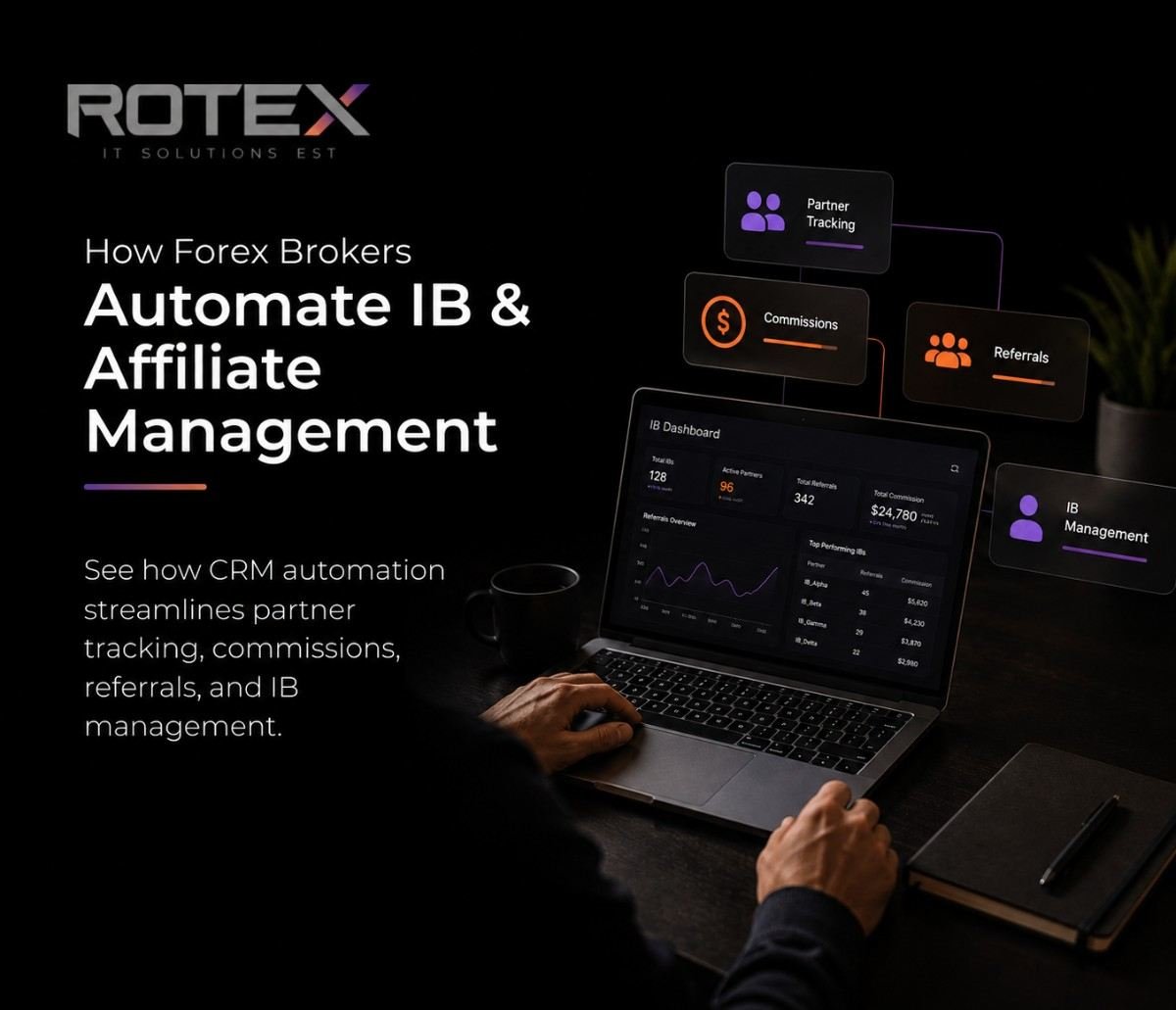
| Quick Answer Forex IB management software is the CRM module that tracks referred leads, calculates multi-tier commissions from live trading data, and gives introducing brokers and affiliates a real-time portal to monitor referrals and payouts — replacing manual spreadsheet-based commission tracking. |
Table of Contents
● What Is Forex IB Management Software?
● How Attribution and Tracking Work
● Multi-Tier Commission Calculation
● The IB Portal Experience
● Common IB Management Problems
● Structuring Commission Tiers Fairly
● Preventing IB Fraud and Self-Referral Abuse
● Supporting IBs With Marketing Resources
● Handling IB Payouts Reliably
● Reporting Standards IBs Actually Want
● Integrating IB Data With Marketing Attribution
● Frequently Asked Questions
What Is Forex IB Management Software?
Forex IB management software is the module of a broker’s CRM Software responsible for tracking introducing broker (IB) and affiliate referrals, calculating commissions from actual trading volume, and giving partners visibility into their referred clients’ performance. For brokers running significant partner networks, this module often matters as much as the core CRM itself.
How Attribution and Tracking Work
Every referral link carries a unique IB or affiliate identifier that tags the lead the moment they enter the forex CRM workflow. That tag persists through KYC, account activation and every subsequent trade, so commission can be calculated accurately even months after the initial referral. Accurate attribution depends on this tag being preserved correctly across systems — a common failure point when CRM and trading platform aren’t tightly integrated, as covered in our MT5 CRM integration guide.
Multi-Tier Commission Calculation
Most forex IB programs pay across two or three tiers — a sub-IB refers a client, and both the sub-IB and the master IB above them earn a share of the spread or commission generated. This calculation needs to run against live trading data pulled from the platform, since commissions are typically based on lots traded or spread markup rather than a flat referral fee. Manual tier calculation in spreadsheets is one of the most common sources of IB disputes for growing brokers.
The IB Portal Experience
A dedicated IB portal lets partners see referred client counts, funded accounts, trading volume and pending commission in real time, without needing to email the broker for updates. This transparency is often the single biggest factor in whether an IB continues actively promoting a broker or moves their referral traffic elsewhere — partner retention depends heavily on this visibility.
Common IB Management Problems
Incorrect attribution when a client clears cookies or switches devices before completing signup is a frequent issue, along with commission calculation errors when account groups or instrument-specific commission rates change without updating the CRM’s rule set. Reporting delays — IBs not seeing updated figures for days — also erode trust quickly. Solving these generally comes back to the same integration quality discussed in our forex broker technology stack guide.
Structuring Commission Tiers Fairly
Commission structures need to balance competitiveness against sustainability — tiers that are too generous erode broker margins, while tiers that are too thin fail to attract and retain active IBs. Many brokers structure tiers around trading volume or number of active funded clients, rewarding IBs who bring genuinely engaged traders rather than simply high account counts with minimal trading activity.
Whatever structure is chosen should be configured directly inside the CRM’s IB module rather than managed through side agreements, since undocumented exceptions are one of the most common sources of commission disputes as a partner network grows.
Preventing IB Fraud and Self-Referral Abuse
IB programs are a common target for abuse — self-referral schemes where an individual refers their own secondary accounts purely to earn commission, or coordinated referral rings designed to farm sign-up bonuses. Effective forex IB management software includes fraud detection rules flagging shared IP addresses, payment details or device fingerprints across an IB’s referred client base.
Regularly auditing top-earning IBs for unusual referral patterns — sudden spikes in sign-ups with minimal subsequent trading activity, for example — helps catch abuse before it becomes a significant cost.
Supporting IBs With Marketing Resources
Beyond commission tracking, a strong IB program provides partners with ready-to-use marketing materials, landing pages and performance data they can use to grow their own referral activity. IBs who feel supported with resources, not just paid commissions, tend to remain active for longer.
Handling IB Payouts Reliably
Payout reliability — consistent schedules, clear minimum thresholds, and transparent deduction rules — is often cited by IBs as more important to loyalty than the headline commission rate itself, since delayed or unclear payouts quickly damage trust even with an otherwise generous program.
Reporting Standards IBs Actually Want
Beyond basic commission totals, active IBs typically want visibility into referred client retention, average trading volume per client, and month-over-month trend data — reporting depth that goes beyond a simple running commission balance and helps IBs optimize their own marketing efforts.
Integrating IB Data With Marketing Attribution
Connecting IB referral data with broader marketing attribution tools gives brokers a fuller picture of which channels — IB-driven or direct paid acquisition — produce the highest-value, longest-retained clients, informing where future acquisition budget is best spent.
Frequently Asked Questions
Can IB commissions be based on both spread and volume?
Yes — most CRMs support hybrid commission structures combining a per-lot rate with a percentage of spread markup, configurable per IB tier or account group.
Do IB portals need separate logins from client trading accounts?
Yes, IBs typically get a distinct partner-portal login separate from any personal trading account, since the data and permissions involved are different.