
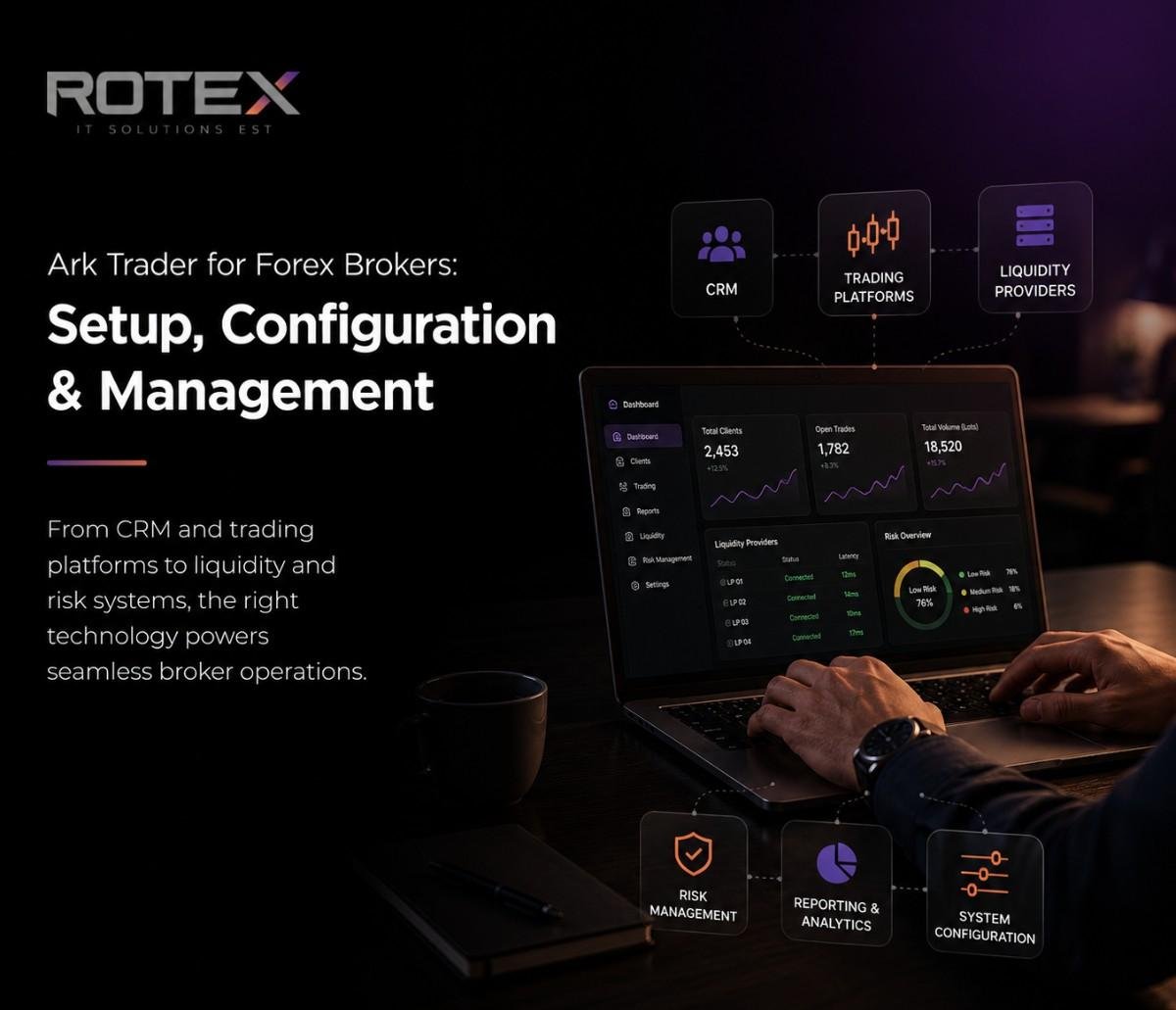
| Quick Answer Ark Trader setup for forex brokers involves platform licensing and white-label configuration, connecting liquidity providers through the platform’s bridge, and integrating a CRM to automate account provisioning, balance sync and reporting. |
Table of Contents
● What Is Ark Trader?
● Platform Setup and Configuration
● Liquidity Integration
● CRM Integration
● Ensuring Platform Stability
● Evaluating Vendor Support and Longevity
● Building a Contingency Plan
● Cost Comparison Against Established Platforms
● Client Trust Considerations for Newer Platforms
● Weighing Platform Independence Against Ecosystem Maturity
● Requesting Broker References Before Committing
● Keeping Integration Layers Platform-Agnostic
● Setting Realistic Expectations With Clients
● Frequently Asked Questions
What Is Ark Trader?
Ark Trader for Forex brokers is a trading platform option within the growing set of MetaTrader alternatives that brokers evaluate as part of their Trading Platforms strategy, particularly when looking for platform independence and flexible white-label terms.
Platform Setup and Configuration
Setup covers instrument and symbol configuration, trading condition rules across account tiers, and white-label branding. Hosting the platform close to your liquidity providers remains critical for execution quality, following the same reasoning outlined in our forex broker server architecture guide.
Liquidity Integration
Liquidity connectivity follows standard forex liquidity aggregation practice — connecting multiple LPs through a bridge and applying consolidated pricing with configurable markup. Brokers should apply the same A-Book/B-Book routing discipline described in our A-Book vs B-Book vs hybrid model guide.
CRM Integration
Connecting the platform to a CRM enables the same kind of automated forex CRM workflow used across other platforms — account provisioning tied to KYC approval, real-time balance sync, and trade data feeding into reporting and commission calculation.
Ensuring Platform Stability
Ongoing management includes monitoring server uptime, reviewing symbol and trading condition settings periodically, and keeping bridge and CRM connectors current. Exposure data should flow into a proper Risk Management Software setup regardless of which platform a broker chooses.
Evaluating Vendor Support and Longevity
Because Ark Trader is a newer entrant relative to MetaTrader, brokers should evaluate the vendor’s support responsiveness, update cadence and roadmap commitments carefully before committing significant client volume to the platform. Requesting references from other brokers already running the platform in production, and reviewing how quickly past issues were resolved, gives a more realistic picture than marketing materials alone.
Building a Contingency Plan
As with any less-established platform choice, brokers should maintain a documented contingency plan for migrating away if the vendor relationship or platform stability doesn’t meet expectations over time. Keeping CRM, liquidity and risk systems as platform-agnostic as possible — rather than deeply coupled to Ark Trader specifically — makes any future migration considerably less disruptive.
Cost Comparison Against Established Platforms
Newer platforms like Ark Trader sometimes offer more competitive licensing terms than established options as they build market share, which can make the total cost of ownership attractive for brokers willing to accept the tradeoffs of a less mature ecosystem in exchange for lower upfront and ongoing costs.
Client Trust Considerations for Newer Platforms
Some clients, particularly more experienced traders, research platform reputation before opening an account, so brokers adopting newer platforms should be prepared to explain the platform’s capabilities and stability confidently as part of their onboarding and marketing communication.
Weighing Platform Independence Against Ecosystem Maturity
The core decision with Ark Trader, as with any newer platform, comes down to how much a broker values independence from established MetaQuotes infrastructure against the wider pool of pre-built integrations and vendor experience available for more established platforms.
Requesting Broker References Before Committing
Before committing significant client volume to Ark Trader, brokers should request direct references from other operators running it in production, asking specifically about support responsiveness during past incidents rather than relying solely on vendor-provided case studies.
Keeping Integration Layers Platform-Agnostic
Building the CRM and risk layer to be as platform-agnostic as possible, rather than deeply customized specifically for Ark Trader’s API, preserves the option to migrate to a different platform later without a full technology rebuild if the relationship doesn’t meet expectations.
Setting Realistic Expectations With Clients
Brokers introducing Ark Trader should set realistic expectations with clients about platform maturity relative to established alternatives, framing the choice honestly around its specific strengths rather than overselling feature parity it may not yet fully offer.
Frequently Asked Questions
How does a broker choose between newer platforms like Ark Trader and established options like MT5?
The decision typically comes down to target client base, available integrations, and how much platform independence versus ecosystem maturity the broker values.
Can Ark Trader be run alongside MetaTrader platforms?
Yes, brokers frequently run multiple platforms in parallel behind a shared CRM and liquidity layer.